Planetary Responsibility Across Generations

Ludvig Nobel
Honoring a Legacy of Knowledge and Humanity
Named in honor of his ancestor Ludvig Nobel, the eldest brother of Alfred Nobel, Ludvig Nobel carries forward a legacy rooted in curiosity, responsibility, and human progress. With a background in anthropology and environmental sciences, his work explores how knowledge, culture, and innovation can contribute to a more balanced relationship between humanity and the living world. He is guided by a commitment to dialogue, global understanding, and the belief that shared wisdom can help shape a more peaceful, responsible, and livable future.

Honoring a Legacy of Knowledge and Humanity
Honoring a Legacy of Knowledge and Humanity
Ludvig’s connection to the Nobel heritage has long been a meaningful part of his life. He was invited to attend the Nobel Prize Ceremonies in Stockholm in 1999 and again in 2024, experiences that deepened his appreciation for the values of inquiry, responsibility, and service to humankind reflected in Alfred Nobel’s vision. Inspired by this legacy, Ludvig seeks to carry forward a spirit of curiosity, human dignity, and thoughtful responsibility in his own work across generations.
“For the greatest benefit to humankind.”
— Alfred Nobel
About Ludvig Nobel
About Ludvig Nobel
This is a personal space shaped by Ludvig Nobel to explore how science, society, technology, and human dignity meet in a rapidly changing world. It is grounded in planetary responsibility, thoughtful dialogue, and the belief that wisdom, clarity, and human connection remain essential in a time of deep change. Rather than adding to the noise, it offers reflections and conversations that seek a more constructive, responsible, and humane direction for our shared future.
Victoria Nobel

Victoria Nobel, wife of Ludvig Nobel, is a modern Renaissance woman whose creative spirit and intellectual curiosity span the arts, design, music, horticulture, and culinary traditions. Trilingual and fluent in Chinese, English, and Swedish, she brings a distinctly international perspective to her life and work.
She also comes from a family with a strong intellectual and cultural heritage. Her grandfather was a well-known doctor of Traditional Chinese Medicine, reflecting a family tradition rooted in learning, care, and the exchange of knowledge across generations.
Entrepreneurship & Leadership
Victoria founded a luxury import business at NK Department Store in Stockholm in the early 1990s, introducing handcrafted furniture and rare interior pieces to Scandinavian audiences. Her discerning eye and entrepreneurial vision helped shape a brand known for sophistication, beauty, and quality.
Creative & Artistic Expression
As an oil painter, Victoria transforms canvas into vibrant expressions of color, atmosphere, and feeling. She is equally at home at the piano, where her love of classical music finds graceful expression through thoughtful and sensitive performances.
Design & Aesthetics
Victoria brings a distinctive sense of harmony to interior design, combining beauty with balance. Her work often integrates principles of Feng Shui, creating environments that feel both elegant and grounding.
Horticulture & Nature
Her gardens reflect a deep passion for rare and historic roses, including the notable Rosa sine spinis from the sixteenth century. One of her rose gardens in Åkersberga, in the Stockholm archipelago, includes more than one hundred varieties cultivated with care, patience, and expertise.
Culinary Traditions and Well Being
In the kitchen, Victoria blends Asian and European traditions into refined fusion dishes that reflect both creativity and a deep appreciation for freshness, flavor, and presentation.
Her approach to health and daily life has also been deeply influenced by her family background. Her grandfather was a well known doctor of Traditional Chinese Medicine, and that heritage left a lasting impression on her understanding of balance, nourishment, and well being.
This influence can be seen in the way she lives and cooks. Victoria places great importance on fresh, whole foods, meals prepared from scratch, and the idea that food is not only for pleasure, but also for vitality, balance, and healing. For her, the kitchen is an extension of a holistic way of life in which care, intuition, and natural nourishment all play an essential role.
Victoria Nobel’s life and work reflect a rare blend of refinement, creativity, and holistic wisdom. Through all that she creates, she brings beauty, balance, and imagination to the world around her.
A Moment in History
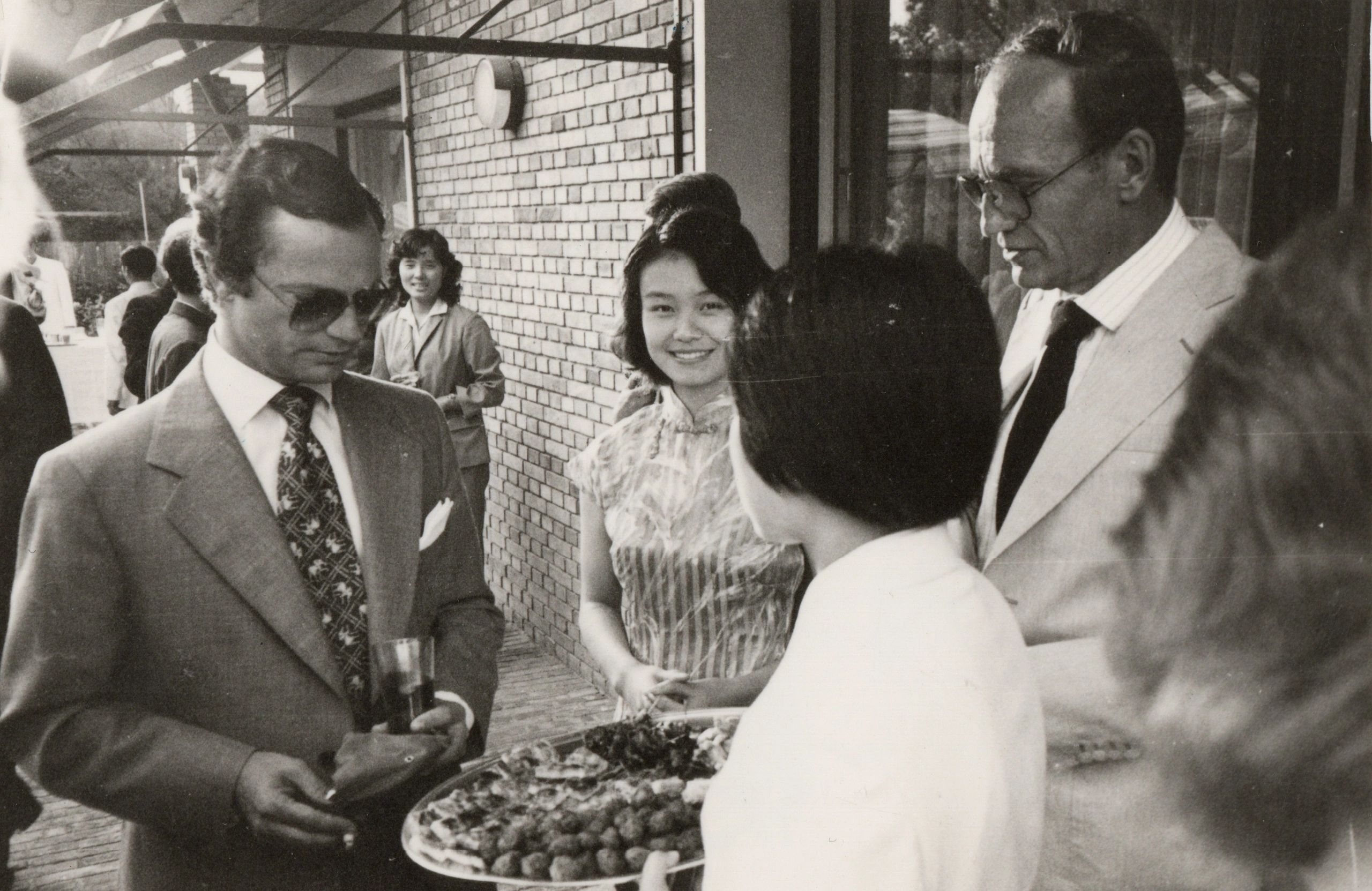
King Carl XVI Gustaf of Sweden with Victoria Nobel and Hans Holmér during an official visit to Beijing.
The photograph was taken at the Swedish Embassy in Beijing on 17 September 1981.
A personal moment that also reflects a period of growing dialogue and engagement between Sweden and China.